
Most schools teach children what To think.
We teach them how.
Apollo meets every academic standard — but we've never believed a standard tells you how to raise a thinker. Here's how we approach learning differently, and why it matters for the rest of your child's life.
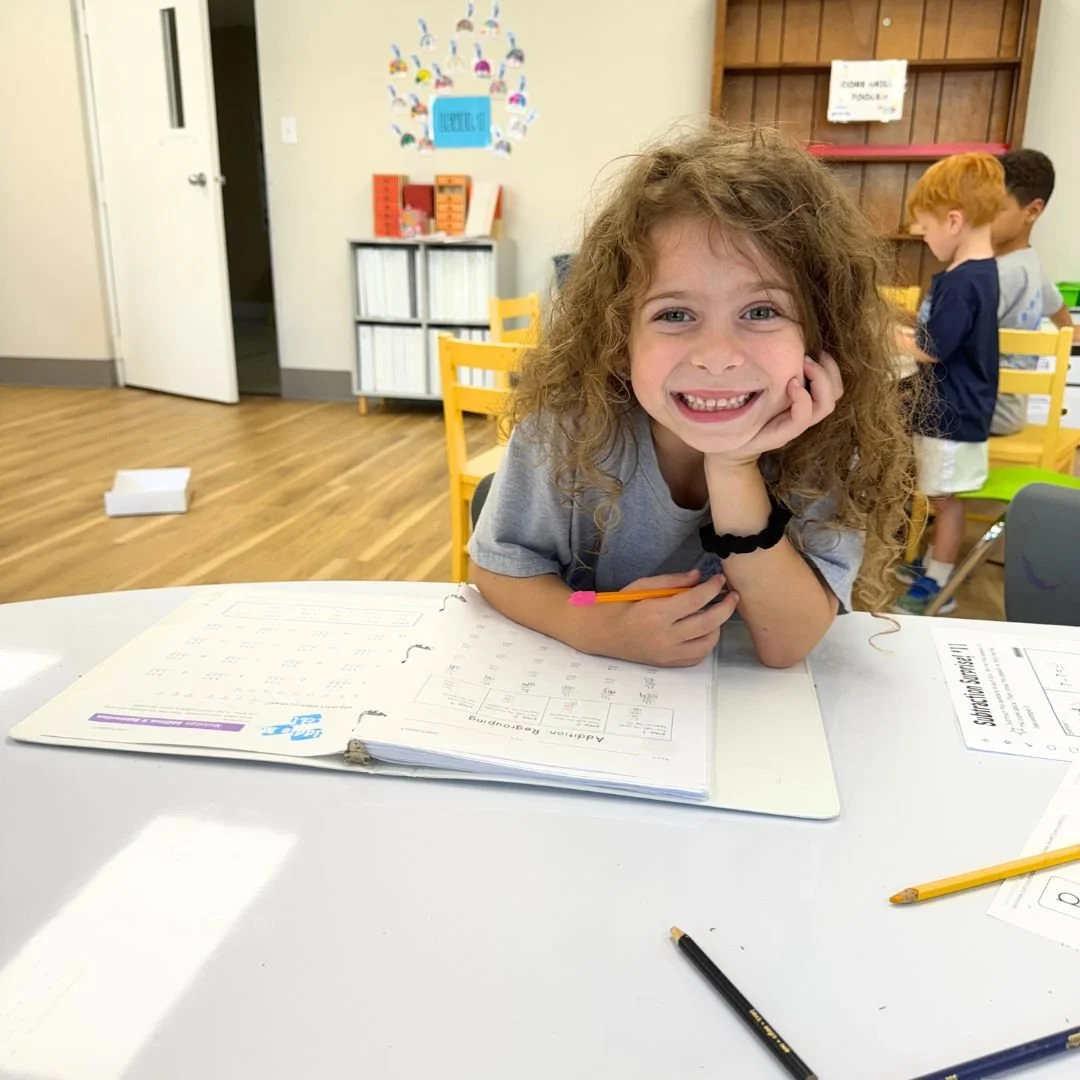
Mastery means owning it, not just passing it
We meet every standard. We just don't let the calendar decide when.
Florida's B.E.S.T. standards tell us what every learner should know. What they don't tell us is that a child who moves on before truly understanding something will spend years quietly filling in gaps - or worse, learning to hide them. And on the other side, a child who is ready to move ahead can lose momentum when held to the pace of the classroom.
At Apollo, learners progress when they're ready. Not when the school year flips to October, not when the rest of the class moves on. Every academic standard is covered - in math, in ELA, across every grade band. We just honor the reality that readiness doesn't follow a calendar.
WHAT THIS LOOKS LIKE
A Spark learner spending an extra two weeks on place value isn't falling behind. They're making sure the foundation is solid before three-digit addition goes on top of it.
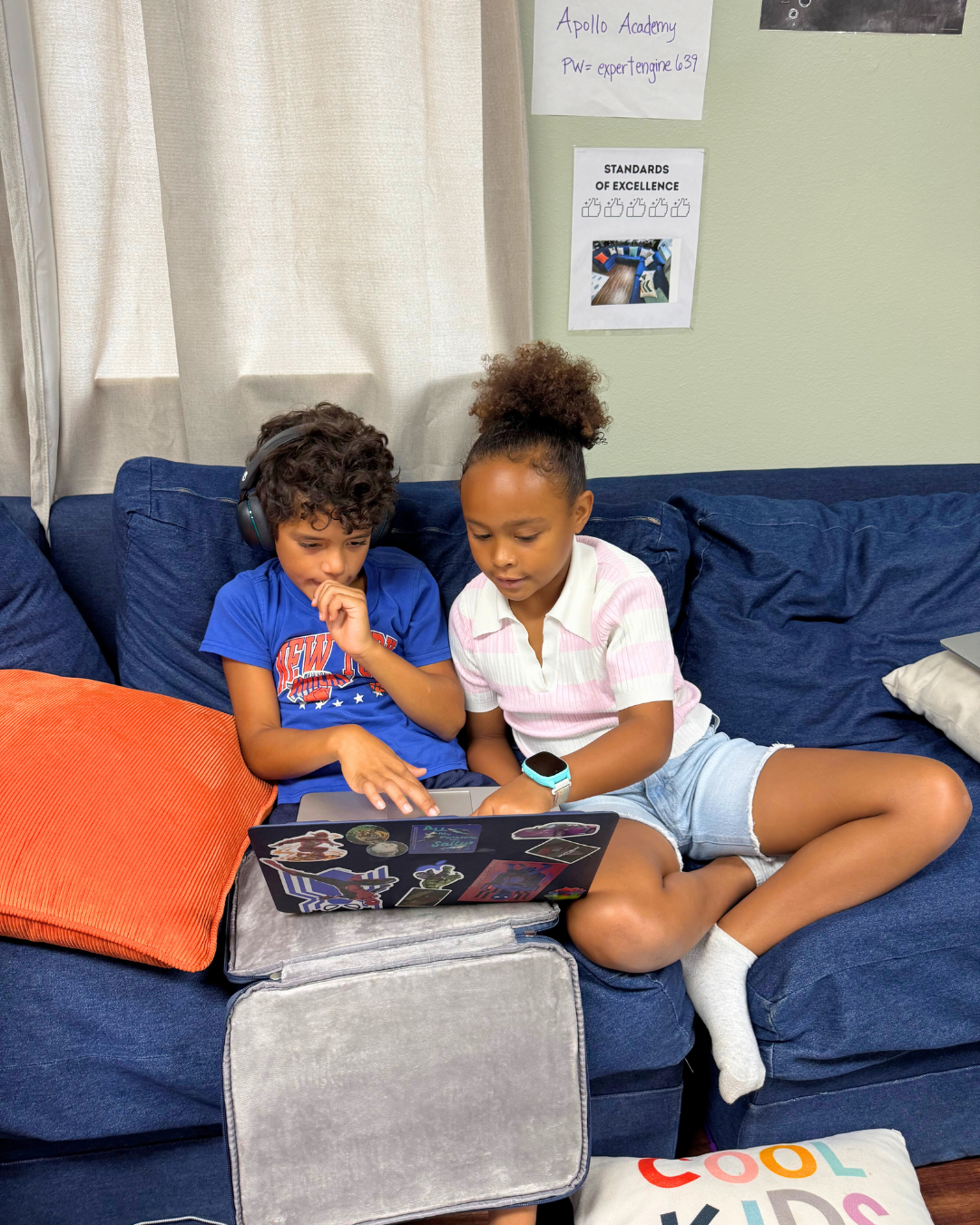
100% before moving on. Every time. No exceptions.
Standards are the floor, not the ceiling
Most curricula require a child to demonstrate a skill once - on the right day, in the right format - and then move on. Apollo requires something harder: that a learner can demonstrate understanding across multiple tools, multiple modalities, and multiple moments before advancing.
This isn't repetition for the sake of it. A child who has touched a concept through Montessori manipulatives, worked through it independently in a binder, reinforced it in a daily game, and encountered it again through an adaptive digital program doesn't just know the concept - they own it. They can approach it from any angle because they've already seen it from several.
WHAT THIS LOOKS LIKE
In Discovery, math fact mastery isn't declared after a timed quiz. It's verified through ALEKS QuickTables - requiring 100% demonstrated mastery - only after Khan Academy has confirmed the same standard from a completely different angle.
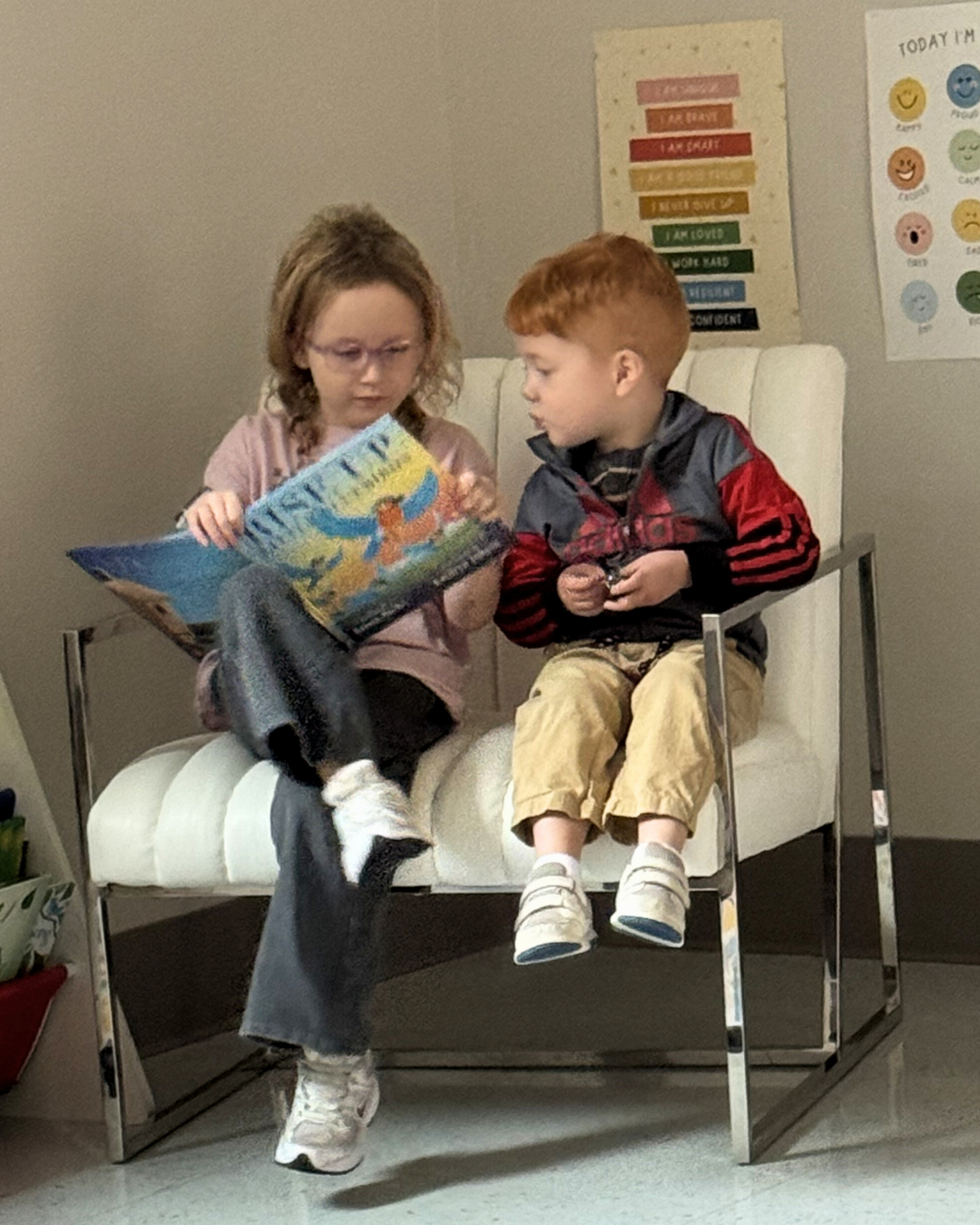
We don't teach word problems. We Offer an approach that builds the skills to reason.
The goal is a thinker, not a test-taker
When most schools reach word problems in math, they treat them as a harder version of computation. At Apollo, the entire fourth level of our Spark math program is dedicated to deductive reasoning and logical thinking — not as an add-on, but as the destination the first three levels have been building toward.
The same is true in ELA. A Pathfinders learner completing a Deep Book Badge isn't writing a book report. They're constructing a persuasive argument, defending it before a committee, analyzing an author's craft, and asking what a book means for who they're becoming. The skill always points somewhere larger than itself.
WHAT THIS LOOKS LIKE
To earn a Deep Book Badge, a learner must pitch their book choice to a three-person committee — in writing, persuasively, with evidence — before they even begin reading. That's not an ELA exercise. That's an exercise in thinking.
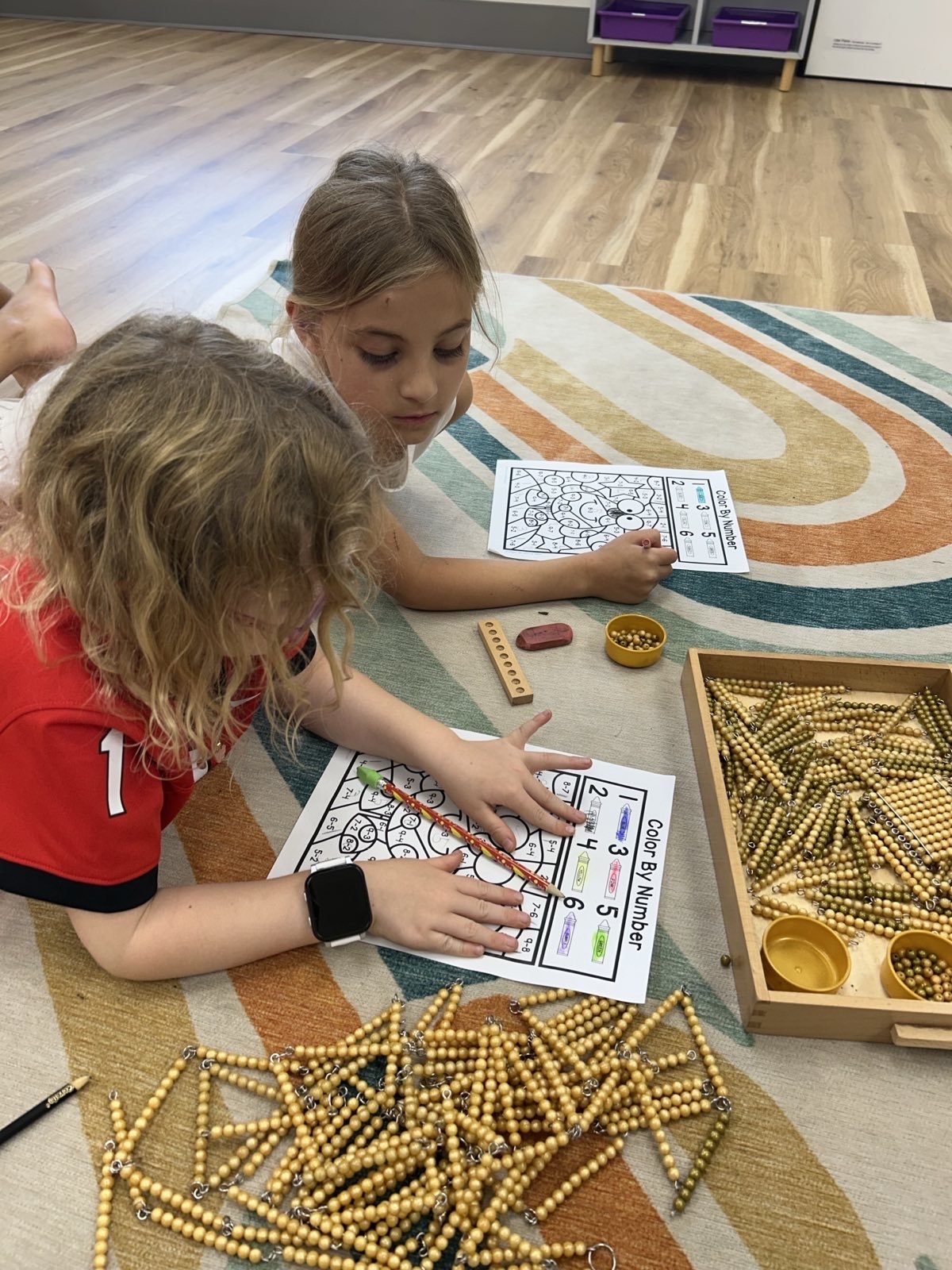
We're not preparing children to solve problems we've already given them.
Every concept is a doorway, not a destination
The world your child is growing into will be full of problems that don't look like the ones in any textbook. The learners who thrive won't be the ones who memorized the most answers - they'll be the ones who know how to approach something unfamiliar, choose a strategy, and figure it out even when it looks different than anything they've seen before.
That's Apollo's definition of mastery. Not "can this child solve this problem" - but "does this child know how to approach a problem." Any problem. In any form. In any context.
WHAT THIS LOOKS LIKE
In Spark Level 3, learners are introduced to Grade 3 math concepts like 3-digit subtraction with groupings and fractions - not because they're expected to master them yet, but because stretching into bigger ideas is exactly what builds problem-solving instincts and critical thinking. When those same learners reach Discovery, they encounter those concepts again through Khan Academy — and this time, they don't just understand them. They own them
The difference, side by side.
traditional School
Move on when the calendar says to
Demonstrate a skill once, on a test
One tool, one modality, one pass
Standards are the goal
Word problems are secondary; considered harder computation
Prepare to answer known questions
Teacher decides when mastery is reached
Apollo Academy
Move on when the learner is ready
Demonstrate mastery at 100%, repeatedly
Multiple tools, multiple angles, owned deeply
Standards are the floor, thinking is the ceiling
Reasoning is a dedicated, intentional destination
Prepare to approach unknown problems
Learner owns their mastery -and knows it
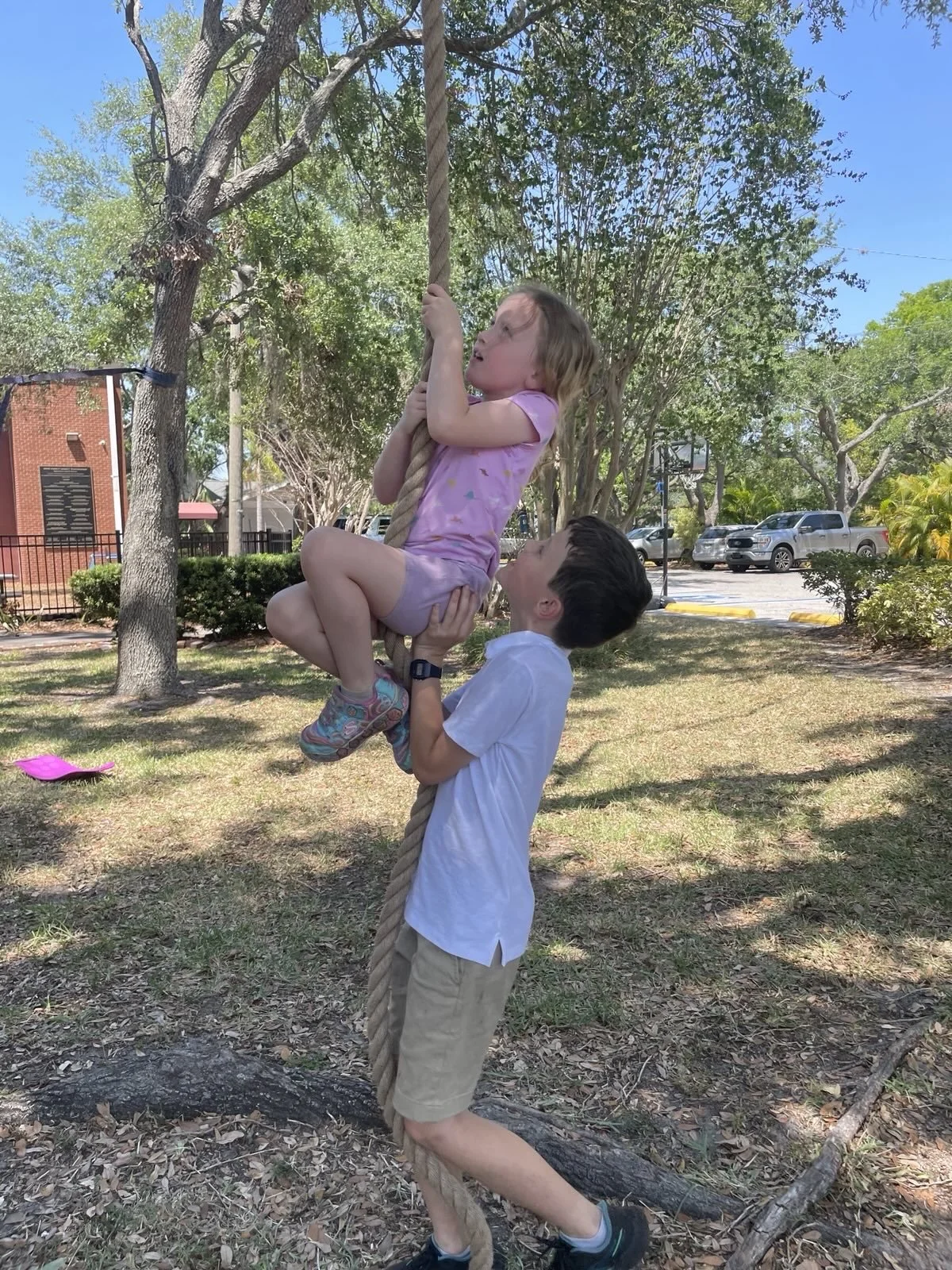
This is what it means to learn to learn.
Every child who walks through our doors will eventually walk out and into a world we can't fully predict. Our job isn't to fill them with answers. It's to send them into that world knowing how to ask better questions - and how to find their own way through.